Beyond the Menu Cover: Creating a Coordinated Restaurant Tabletop
Beyond the Menu Cover
Creating a Coordinated Restaurant Tabletop
A restaurant's brand is communicated through more than its name, logo, and decor. Guests also experience it through the items they handle throughout their visit - from the moment they open the menu until the check arrives.
Custom menu covers provide an opportunity to make that experience more distinctive. By coordinating your menu covers with check presenters, placemats, coasters, wine lists, and other tabletop products, you can create a presentation that feels intentional and connected to your restaurant's identity.
The goal is not simply to match every item. It is to create a tabletop program in which the materials, colors, textures, and branding work together.
Start With the Personality of Your Restaurant
Before selecting a menu cover material, think about what you want guests to feel when they sit down.
Is your concept rustic and welcoming? Sophisticated and upscale? Contemporary and energetic? Natural and organic? Wine-focused? Industrial?
The right material can reinforce that atmosphere before a guest reads the first menu item. A steakhouse, lodge, tavern, or farm-to-table restaurant may be drawn to warm wood-inspired textures. A wine bar may prefer a material with the organic character of cork. An upscale independent restaurant may want a one-of-a-kind finish that becomes part of the overall design.
Starting with the restaurant's personality makes it easier to select a custom menu cover that feels like a natural extension of the concept.
Distinctive Materials Give Menu Covers Character Standard materials can be an excellent choice, but some restaurants want their menu presentation to make a stronger visual statement. Risch offers distinctive materials that can help create that character.
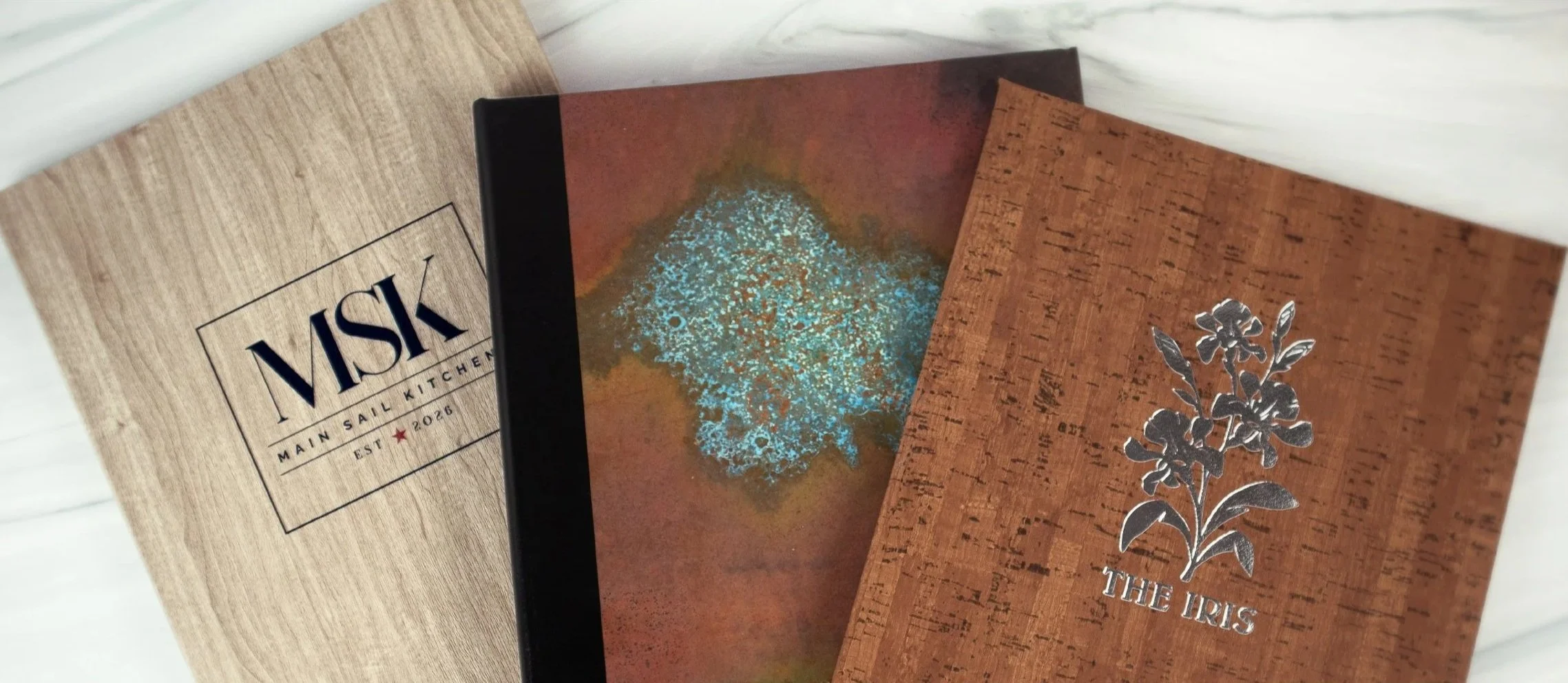
Sherwood Faux Wood Menu Covers
Sherwood offers the warm, familiar appearance of authentic wood grain in a durable faux-wood material. It is well suited for restaurants that want to create a rustic, natural, or welcoming atmosphere.
Sherwood menu covers can complement concepts such as:
- Steakhouses
- Lodges and resorts
- Barbecue restaurants
- Taverns and breweries
- Farm-to-table restaurants
- Rustic or nature-inspired dining rooms
Because Sherwood is available in multiple colors, the material can be coordinated with the restaurant's furniture, flooring, wall treatments, and existing brand colors.
Vino Faux Cork Menu Covers
Vino provides the organic appearance of cork with the durability of a faux-cork material. It is designed to resist the cracking that can occur with real cork while maintaining its natural visual character.
Vino can be an especially attractive option for:
- Wine bars
- Wineries and tasting rooms
- Italian and Mediterranean restaurants
- Resorts
- Farm-to-table concepts
- Restaurants with natural or sustainability-inspired decor
The material also creates an attractive background for a custom logo, allowing the restaurant's branding to become part of the design.
Patina Copper Menu Covers
Patina Copper creates an upscale, one-of-a-kind presentation. Natural variations in the copper finish give every menu cover its own distinctive character, so no two covers look exactly the same.
Patina works particularly well for restaurants that want the menu cover itself to become a design feature. Its colorful, evolving appearance can complement contemporary restaurants, chef-driven concepts, boutique hotels, historic properties, and upscale dining rooms.
Patina is intended specifically for menu covers. Coordinating tabletop products can be created using complementary colors and textures rather than repeating the same material throughout the table.
Extend the Design Beyond the Menu Cover
Once you have selected a menu cover material and color, consider how that choice can carry through the rest of the guest experience.
Coordinating products may include:
- Custom check presenters
- Wine and beverage lists
- Restaurant placemats
- Custom coasters
- Guest check holders
- Tabletop signage
- Other guest-facing accessories
For example, a restaurant might choose Sherwood menu covers and coordinating check presenters in complementary wood tones. Vino menu covers could be paired with placemats or coasters that repeat colors from the restaurant's logo or decor.
Patina menu covers could serve as the statement piece, while check presenters and other tabletop items use understated materials in colors drawn from the natural copper finish.
This approach connects the products visually without making the tabletop look overly uniform.
Coordinating Does Not Have to Mean Matching
A coordinated restaurant tabletop is usually more interesting when the products relate to one another without being identical.
Consider combining:
- One material in two complementary colors
- A textured menu cover with a simpler check presenter
- A bold menu cover with neutral placemats
- Coordinating logo colors across different materials
- A statement menu cover with subtle supporting accessories
The menu cover should lead the presentation, while the other tabletop pieces support the overall look.
Use Color to Connect the Tabletop With Your Decor
Material is only one part of the design. Color can help connect your custom menu covers and tabletop products with the rest of the restaurant.
When choosing colors, consider your:
- Restaurant logo
- Furniture and seating
- Flooring and wall finishes
- Dinnerware and linens
- Lighting
- Interior design
- Overall atmosphere
Multiple material colors are available, providing flexibility to coordinate with an existing space or develop a tabletop presentation for a new restaurant concept.
Carry Your Logo Through the Guest Experience
Adding a logo to menu covers, check presenters, coasters, and placemats helps create a consistent brand experience.
A logo is included at no additional charge on Risch's standard products, making it easier to customize multiple tabletop pieces without adding unnecessary expense. Depending on the material and design, a logo may be applied through foil stamping, debossing, printing, or another recommended decoration method.
Repeating the logo selectively - not necessarily on every item - can create a polished presentation without making the tabletop feel overbranded.
Questions to Consider When Designing Your Tabletop Program
As you plan your menu covers and coordinating products, consider the following:
- What should guests feel when they first sit down?
- Which materials best reflect the personality of the restaurant?
- Should the tabletop products match the decor or become part of the decor?
- Which colors connect naturally with the restaurant's branding?
- Should the menu cover be the statement piece?
- Could check presenters, placemats, or coasters carry the design further?
- Would complementary materials create more visual interest than using the same material everywhere? Answering these questions can turn a menu-cover purchase into a complete tabletop presentation.
Create a Tabletop Program for Your Restaurant
Custom menu covers should do more than protect printed pages. They can reinforce your restaurant's atmosphere, introduce your brand, and help create a memorable guest experience.
Whether your concept calls for the warmth of Sherwood, the organic appearance of Vino, the distinctive character of Patina Copper, or another material from the Risch collection, our team can help you choose the right materials, colors, configurations, and coordinating products.
Explore our custom menu cover options or contact Risch to discuss a coordinated tabletop program for your restaurant.